Spinning Flower: A Designer’s Review of This Floral Embroidery
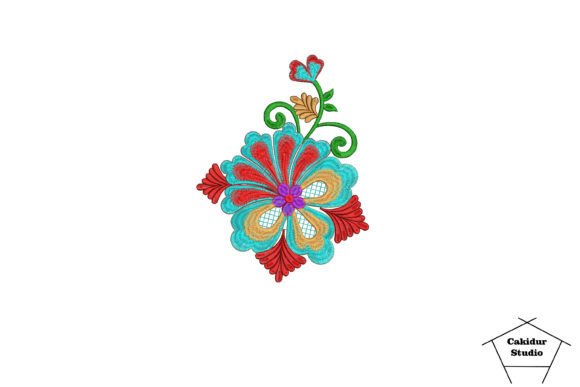
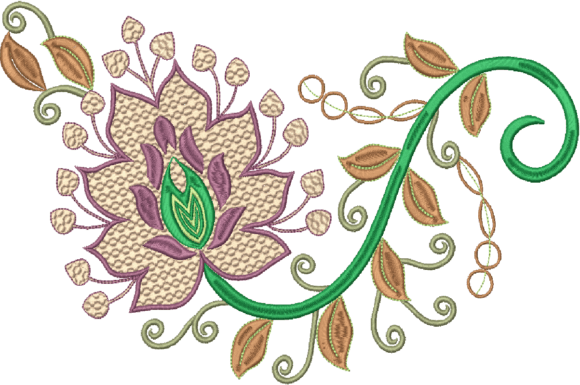
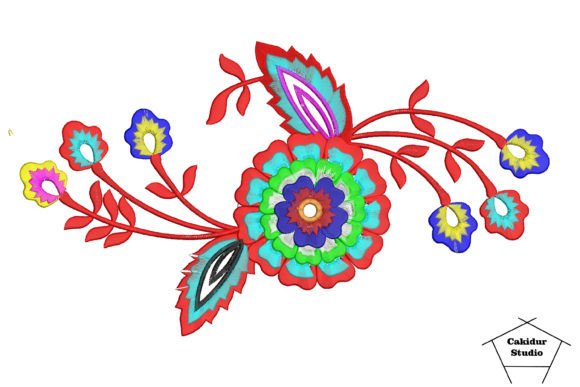
As soon as I opened the Spinning Flower file in my digitizing software, I understood the name. The petals don’t just sit there—they swirl outward from the center with a gentle, kinetic rhythm that feels modern and surprisingly calm. It’s an aesthetic floral embroidery that refuses to be stiff or predictable, and that alone sets it apart from many single-bloom designs I’ve tested. The mood is airy and slightly whimsical, yet the composition stays balanced enough to work on both feminine and unisex pieces. If you design for customers who tire quickly of heavy, vintage-style roses, this one will feel like a breath of fresh thread.
The layout reads as a complete focal point without demanding a massive hoop. The petals overlap in a way that suggests controlled motion, and the negative space between them lets the fabric peek through—a detail I always appreciate because it keeps finished products from looking over-embroidered or stiff. The shape itself is round but fluid, so it looks equally at home centered on a pillow cover or scattered in a corner of a tote bag. My first thought: this belongs on something you want to touch.
The Visual Energy Behind Spinning Flower
Part of what gives Spinning Flower its identity is that it doesn’t try to mimic a hyper-realistic bloom. It leans slightly abstract, using layered petal arcs and gentle curves that remind me of a pinwheel or a flower caught mid-twirl. That makes it incredibly versatile. You can thread it in soft pastels for a nursery blanket and immediately get a peaceful, lullaby-ready look. Swap to deep burgundy and ochre, and suddenly it feels like an autumnal statement on a hand-stitched apron. The design interprets color beautifully, which is a huge advantage when you’re selling products that need to shift with seasonal palettes.
I also noticed how well the stitch direction enhances the swirling effect. Even in the software preview, you can see how satin and fill areas follow the contour of each petal, so when light hits the finished embroidery, it creates a subtle sheen that moves. That kind of thoughtful stitch mapping gives a handcrafted richness to machine-made pieces—exactly the quality that makes a browser stop and click “add to cart.”
Where Spinning Flower Feels Most at Home
Let’s walk through a realistic project scenario, because that’s where a design proves its worth. Imagine you’re putting together a small batch of linen kitchen towels for a spring market. You need something that looks intentional but not overly fussy, something that can stand alone without a companion motif. Spinning Flower fills that brief with ease. On a natural linen towel, stitched in a muted sage or dusty blue, the design becomes a quiet focal point that suggests artisanal care. I’d even pair it with a plain woven label and sell the set as a boutique kitchen trio.
Beyond kitchen linens, this design fits naturally into a long list of handmade products:
- Lumbar pillow covers (especially in a hoop-friendly 5×7 or 6×10 size)
- Structured tote bags where the embroidery sits flat on a front pocket
- Unisex sweatshirts—place it on the left chest and let the swirl serve as a subtle logo alternative
- Baby onesies and muslin swaddles (soft thread colors, reduced density, and a no-show mesh stabilizer are your friends here)
- Canvas zip pouches for a creative small gift that photographs well
- Simple t-shirts, especially when you want a design that looks fresh without needing text
For apparel decorators who sell custom apparel, I see Spinning Flower working brilliantly as a standalone back-of-hoodie centerpiece. Because the design has built-in motion, it doesn’t need text or extras to feel complete. That means less hooping time and a cleaner look—both wins in a production environment.
Tricky Surfaces and Small Hoops: A Reality Check
No embroidery design is universal, and as a reviewer who’s ruined more test scraps than I’d like to admit, I have to mention where Spinning Flower might require extra caution. The swirling fine lines and layered satin petals can lose clarity on heavily textured or stretchy fabrics if you skip proper preparation. On a thin, slinky knit, for example, any pulling or distortion will immediately break the petal flow, turning that graceful swirl into a jagged mess. You must use a cutaway stabilizer on knits and test your hooping tension before the final run.
Other surfaces that need extra love:
- Curved caps and hats—the design is round, but a hat crown’s curve can squash the petals at the top and bottom if digitized without a slight elliptical compensation. Ask the vendor if a hat-specific version exists, or do a placement test on a structured cap with ample basting.
- Dark fabrics—light thread colors will pop, but any low-density fill may show the dark background through the stitching. Always test on your actual material before committing to a dozen black hoodies.
- Small hoops—if this design exceeds 4×4 inches, you’ll need to split it, which means precise re-hooping. On a swirling flower, registration marks become critical; a misalignment in the center will be instantly noticeable.
- Thin, loosely woven linens—they can pucker even with a good backing. A lightweight fusible woven interfacing behind the embroidery area can work wonders.
And a quick word about stitch density: because the petals have delicate edges, any excess density can make them stiff. I recommend running a test stitch-out on a scrap of your target fabric and bending it. If it cracks or feels plastic-like, you might need to adjust the density—something best discussed with the digitizer if editable files are provided. The description mentions this is a machine embroidery design ready for pillow covers, bed sheets, and hoodies, so the default should be comfortable on most medium-weight wovens and cottons.
How Spinning Flower Elevates Your Handmade Products
When I think about customer perception, the difference between a generic daisy and a design like Spinning Flower is immediate. A swirly, elegant bloom on a handcrafted item signals that the maker put thought into selecting the design, not just grabbing any freebie. It communicates a higher level of product curation. For Etsy sellers, that translates into higher perceived value and a cleaner brand image.
If you’re building a cohesive spring collection or a line of boutique baby gifts, a single, well–chosen single flower motif can act as your signature. Spinning Flower’s swirling personality stays recognizable even when scaled differently, so you could use a smaller version on a matching burp cloth while keeping the full design on the nursery pillow. That consistency builds buyer trust and makes your shop look professionally designed, not just a random collection of items.
Photographing finished pieces is another win. Because the design has directional motion, it flatters flat-lay and lifestyle shots alike. On a folded sweatshirt, the swirl draws the eye in and up, making even a simple product photo feel editorial. For printable mockups or digital product previews, that same energy helps your listing thumbnail stand out in a sea of floral embroidery offerings.
Stitch Prep: What to Test Before Your First Run
I never start a client project without a mini checklist, especially when I’m adding a new embroidery file to my library. For Spinning Flower, here’s what I’d do before even loading a final garment:
- Run a sample on two different backgrounds. A light cotton and a dark denim. Check whether the thread colors hold their contrast—pale petals can vanish on white, and dark outlines can feel harsh on black.
- Inspect small details. Look at the center of the flower and the tips of the petals. Are there any jump stitches that need trimming? Does the design clean up nicely without pulling?
- Try a monochrome test. Stitch it in a single color on muslin. This reveals the shape’s true readability. If it still looks graceful without multiple colors, you know the digitizing is solid.
- Confirm hoop size and file formats. The product description doesn’t list specific dimensions or formats, so before buying, check exactly what’s included. You don’t want to discover on a deadline that your favorite 4×4 hoop can’t handle the design or that the file only comes in a format your machine doesn’t read.
- Test stabilizer combinations. For a sweatshirt, I’d use a medium–weight cutaway. For a tea towel, a tear–away with a light fusible mesh to prevent tunneling. Don’t guess—stitch a small section first.
- Wash and dry the sample. Especially if you plan to sell items that will end up in someone’s washing machine. Check for thread shrinkage, color bleeding, and puckering. A beautiful design loses all its charm if it warps after the first laundry cycle.
Licensing, Commercial Use, and Your Creative Business
For those of us who sell finished products or run a small craft business, the legal side matters as much as the stitch quality. The description for Spinning Flower doesn’t explicitly state whether commercial use is allowed, and that’s a detail you must clarify before embroidering items for sale. I’d always reach out to the vendor or read the accompanying license file. Some designers offer a standard license that covers finished physical products but restricts digital resale; others require a separate commercial license for Etsy shops or craft fair merchandise. Take five minutes to verify this. It protects you, and it respects the digitizer who put hours into creating this Single Flowers collection.
If the license does permit commercial use, Spinning Flower becomes a real asset to your design assets folder. You can scale it for different product types—think tiny embroidered patches, framed fabric art, or even a stitched detail on a wedding ring bearer’s pillow. The design’s neutral elegance means you won’t have to create separate listings for gender-specific products, which streamlines your inventory.
A Final Thought for Makers
After evaluating dozens of floral embroidery patterns, I can honestly say that Spinning Flower earns its keep. It avoids the heavy, over-digitized feel that plagues many machine embroidery design files, and it brings a sense of movement that feels intentional rather than chaotic. It won’t solve every project challenge—you’ll still need to match thread colors, choose the right stabilizer, and double–check sizing—but as a go–to embroidery motif for pillow covers, bed sheets, tablecloths, t-shirts, hoodies, or the other creative touch items the description mentions, it’s a strong, reliable choice.
Whether you’re stitching a one–off personalized gift for a friend or building a small shop product line around airy, modern botanicals, this design gives you the kind of polished result that makes people ask, “Where did you get that?” And in this business, that’s the question that turns a hobby into a repeat customer base.