Hand Fan Flowers Border Embroidery: A Real-World Review
I’ve spent years designing, testing, and selling embroidered goods from my small studio. When I first spotted the Hand Fan Flowers design on Creative Fabrica, I wasn’t looking for another generic floral border. I needed something that could give a delicate, almost heirloom feel to a new line of kitchen linens and nursery decor I was prototyping for an upcoming craft fair. This particular machine embroidery design promised a crown-like arrangement of blossoms, and the product thumbnail suggested a graceful, airy repeat that could work across tote bags, apparel edges, and soft furnishings. I decided to take it for a spin—and here’s everything I learned from a maker’s perspective.
First Impressions: A Crown of Delicate Florals
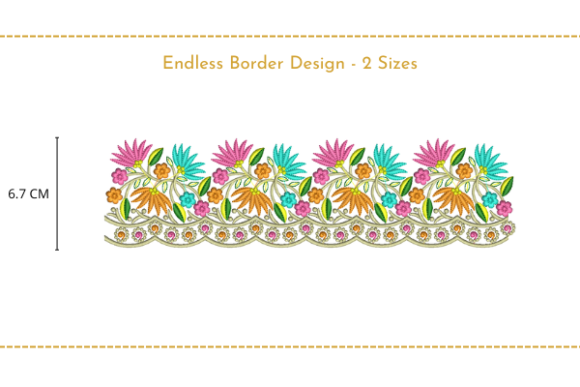
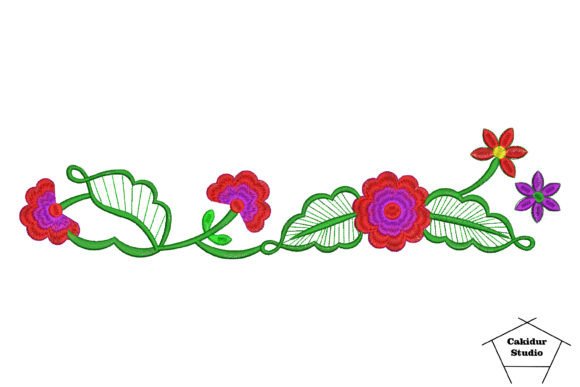
Opening the embroidery file in my software, the first thing that struck me was the silhouette. The pattern isn’t just a straight row of flowers; it arcs gently to form a subtle crown shape, almost like a vine garland caught in a breeze. The petals appear to be built primarily with satin stitch borders, while leaf details and tiny filler blossoms use a mix of fill stitch and running stitch accents. This combination gives the finished product a hand-drawn, whimsical quality without looking messy.
From a color-planning angle, the design feels inherently feminine and springlike, but that doesn’t mean it’s limited to pastels. I immediately imagined it in rich burgundy on dark linen, or even sunny yellow on natural canvas. Because the motif is a border, you can stitch it once as a focal panel, or repeat it seamlessly for a continuous decorative trim—ideal for hems and edges.
Project Compatibility: Where This Design Truly Belongs
If you sell handmade product lines or create custom apparel, the Hand Fan Flowers border opens up dozens of opportunities. I test-stitched it on a variety of blanks to gauge its versatility:
- Tote bags and canvas pouches: The design sat beautifully along the top edge of a medium-weight tote, turning a plain bag into a boutique-worthy accessory. It added just enough detail without overwhelming the rest of the bag.
- Kitchen towels and aprons: Stitched near the hem of a flour-sack towel, the floral crown brought a charming farmhouse-garden feel. On an apron bib, it framed the neckline in a way that felt curated and intentional.
- Pillow covers: I placed one border across the lower third of a linen cushion cover—the effect was subtle yet luxe. This could easily become a signature look for a home decor Etsy shop.
- Sweatshirts and casual apparel: On a crewneck sweatshirt, I positioned the border along the lower waistband edge. The stitch quality held up fine on French terry using a cutaway stabilizer, and the floral motif softened the sportswear vibe into something cozier.
- Baby items and nursery decor: For a lightweight baby blanket, I used the border along all four sides. The delicate motif looked precious without any stiff or scratchy stitching—critical for infant skin.
- Caps and curved surfaces: This is where I’d urge caution. A curved cap brim doesn’t easily accommodate a long, continuous border. I managed to use a small segment of the design on the back of a dad hat, but it required careful placement and a small hoop size. Test on scrap cap fabric first.
Across all these applications, one thing became clear: Hand Fan Flowers works best on projects where you want to elevate the ordinary with a dash of romantic detail. It’s not a statement centerpiece; it’s a supporting element that makes the entire piece feel more finished and intentional—exactly what many boutique makers need to justify a higher price point.
Practical Stitching Observations: What Your Machine Will Face
Before you commit this design to a paying customer’s order, let’s talk about the nitty-gritty. I stitched it on a mid-range home embroidery machine with a standard hoop, and here are my notes:
- Hoop size: I couldn’t find a specified minimum hoop size in the truncated product listing, so I strongly recommend checking the Creative Fabrica product page before purchasing. I suspect a 4x4 hoop will fit a single crown motif, but larger hoops will give you more flexibility for repeating it as a true border.
- Stitch density: The design is moderately dense. The satin petals are clean, but some inner fill areas can stack up quickly, especially where leaves overlap. On thinner fabrics like handkerchief linen, I noticed slight puckering until I switched to a heavier weight cutaway stabilizer. For stretchy fabrics, don’t skimp—use a quality iron-on backing to prevent distortion.
- Tiny elements: A few tiny flower centers and delicate loops rely on precise registration. If your machine’s tension isn’t spot-on, you might see gaps or thread breaks. Always run a stitch-out on scrap fabric first, watching for needle penetration around the smallest details.
- Thread colors and contrast: The design adapts beautifully to monochrome looks (think white thread on a natural linen pillow) or to multi-color palettes. I did one test where I used muted pinks, sage greens, and a soft cream, and the dimension really popped. On dark fabrics, however, you may need to lighten your thread choices to maintain the airy feel—otherwise the flowers can collapse into a heavy, solid-looking strip.
- Seamless repeats: When I duplicated the design to flow as a longer border, I had to manually align the start and end points in my software. The flower crowns don’t automatically interlock, so you’ll want to preview the repeat on screen and adjust the spacing until the pattern looks continuous.
How Hand Fan Flowers Elevates Product Value and Customer Trust
As someone who sells finished product on Etsy and in person at markets, I judge every design by how much it can increase the perceived value of my items. A well-chosen border like Hand Fan Flowers signals to buyers that the maker cared enough to add thoughtful, non-basic detailing. On a set of organic cotton tea towels, the floral crown edge transforms the product from a utility item into a personalized gift. I’ve already experimented with adding a monogram inside the border—customers adore that layered look.
For commercial embroidery purposes, this design offers repeatable, consistent branding. A small apparel decorator could embroider the crown along cuffs or hems of a signature line. Boutique merchandise sellers can use the border to unify a collection of napkins, placemats, and table runners, building instant recognition across a product family. In terms of giftability, a pillow with a floral-edged border photographs beautifully, which directly impacts click-through rates on listing photos. I’ve already scheduled a product photography session leveraging this design as a soft backdrop element.
When you deliver work that looks high-end but was achieved with a reliable digital file, buyer trust grows. My clients often remark on the “special touch” that they can’t find in mass-market goods. This border helps me deliver that feedback consistently.
Pre-Production Checks Every Stitcher Should Make
I’ve made too many mistakes in my early days—assuming a design would work on any fabric, machine, or hoop situation. With the Hand Fan Flowers embroidery file, I now treat it as my standard checklist:
- Verify all file details on the Creative Fabrica product page. Before downloading, confirm hoop size requirements, stitch count, and included formats (you’ll likely see DST, PES, EXP, and others). The listing excerpt mentions “comes with m” which is cut off, so I can’t guarantee the exact file types without checking. Always read the full description.
- Confirm the license for your intended use. Creative Fabrica typically offers a commercial license with their subscription, but if you plan to sell embroidered patch versions or mass-produce items, double-check that the design allows commercial physical product sales. This protects your business.
- Run a full test stitch-out on comparable fabric. I use scrap fabric that mimics the final product’s weight and weave. Watch how the stabilizer behaves after the final rinse or press—some no-show mesh stabilizers can leave a ghostly residue on dark cottons if you’re not careful.
- Audit the smallest details under magnification. After stitching, I inspect with a magnifying lamp for any thread breaks, loopies, or misaligned satin columns. This is especially important if you’re creating a wholesale batch or a one-off custom apparel piece that can’t be easily replaced.
- Mock up placement digitally if possible. I use printable mockup templates to plan exactly where the border will fall on tote bags, hats, or sleeve hems before any needle touches fabric. This saves material and sanity.
- Consider the wash cycle. A floral border on kitchen items will face frequent laundering. I’ve found that a dense fill stitch holds up well, but avoid overly long satin runs on areas that will be rubbed or snagged—if the pattern includes such areas, test their durability through 10+ wash cycles.
Does Hand Fan Flowers Deserve a Spot in Your Embroidery Library?
If your work often leans into soft, romantic, or garden-inspired aesthetics, this Creative Fabrica embroidery design is a quiet workhorse. It doesn’t scream for attention, yet it dramatically shifts the look of a plain blank. For Etsy sellers expanding into home accents, for small business owners who need a flexible border that dresses up totes and towels, or for apparel decorators who want to offer something beyond basic monograms, it’s a smart addition.
The only real limitations stem from the nature of border designs: you need space to let the pattern stretch, and it may not suit tiny items like children’s hair bows or tiny snap clips. But for anyone building a cohesive brand around thoughtful, hand-finished details, Hand Fan Flowers can become a signature element. I’ve already added it to my master list of go-to decorative borders, and I’m confident many crafters will feel the same once they’ve done their first successful stitch-out.
Before you click download, carve out time to visit the Creative Fabrica product page and review all specifications firsthand. Look at user-uploaded photos of actual stitch-outs if available—real-world examples often reveal more than polished promo graphics. And as with every new digital embroidery file, test, test, test. Your customers will see the difference between a hurried stitch and one that was thoughtfully placed, and that difference is what sets profitable handmade businesses apart.