Green Leaf Embroidery Design: A Working Designer's Take
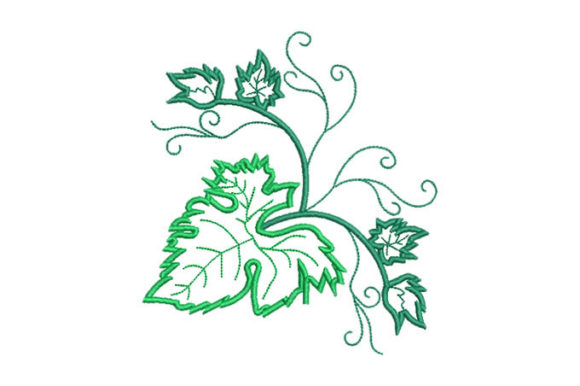
There is something quietly confident about a well-drawn leaf. No loud blooms, no complicated color gradients, just clean botanical shape work that holds its own on fabric. That was my first thought when I loaded Green Leaf into my design software for a closer look. As someone who reviews embroidery files with a critical eye before ever threading a needle, I immediately noticed the silhouette had a natural flow that would translate beautifully into stitched form, the kind of shape that feels restful and balanced on finished goods.
The mood this design creates is earthy without being rustic, fresh without being juvenile. I could see it working in a modern farmhouse kitchen, on a linen blend pillow cover, or stitched onto a soft cotton baby onesie for a woodland-themed gift set. The leaf shape carries a universal appeal that crosses age groups and style preferences, making it a surprisingly versatile asset for makers who sell across different customer brackets.
What Makes Green Leaf Click Before You Even Stitch
Some machine embroidery design files look promising on screen but lose their personality once thread meets fabric. With Green Leaf, the shape language does the heavy lifting. The leaf curves have a gentle asymmetry that mimics real foliage, avoiding that stiff clip-art look that cheapens many botanical designs. This matters enormously when you are building a product line where handmade product quality dictates whether a buyer clicks add to cart or scrolls past.
I pulled the file into my embroidery software and examined the stitch planning at high magnification. The satin stitch borders appeared well mapped, with what looked like careful angle transitions along the leaf veins. The interior seemed to use a combination of fill stitch and possible running stitch underlay, though I always recommend a test sew-out on scrap fabric to verify how those elements interact with your specific stabilizer and thread choices.
The Craft Fair Test That Sold Me On Botanical Simplicity
Last season I helped a friend prepare inventory for a weekend market, and she needed designs that stitched quickly, looked expensive, and appealed to buyers browsing for personalized gift options. We tested several leaf and vine patterns on kitchen towels, canvas tote bags, and unisex crewneck sweatshirts. The designs that performed best were the ones with clear visual identity but moderate stitch count, pieces that felt substantial without adding forty minutes to production time.
Green Leaf would have been a standout in that lineup. I can picture it stitched in an olive thread on natural linen tea towels, or worked in a soft sage green on a cream tote bag design for a boutique grocery shop branding order. The single-leaf format means you can place it as a breast-pocket accent, cluster three together for a repeating motif, or pair it with lettering for a monogram-style custom apparel piece. That compositional flexibility is gold when you are trying to stretch one design file across multiple product types without your shop looking repetitive.
Where This Design Earns Its Keep In A Small Shop
Running an Etsy store or preparing craft business inventory means making practical calls about which designs justify their production time. Green Leaf strikes me as a reliable workhorse rather than a one-project novelty. The botanical theme sits squarely in the Floral category without being overly feminine, which broadens your customer base. Guys will wear a leaf embroidered cap. Kids' clothing with nature motifs appeals to parents avoiding cartoon characters. Wedding clients looking for subtle greenery in their decor embroidery will find this far more usable than a giant rose.
For baby embroidery projects, the smooth lines and presumably moderate stitch density make this a strong candidate. Delicate onesies and soft cotton blankets cannot handle extremely dense stitching without puckering or irritating sensitive skin. A leaf shape with open interior areas and well-distributed stitch coverage sits flat and comfortable against fabric that will be worn or touched frequently.
Real Fabric, Real Thread, Real Honesty About Performance
Here is where practical testing separates a pretty screen preview from a design you can confidently sell. The product notes mention this design works beautifully across fabric types, which is promising, but any experienced embroiderer knows that fabric texture and stabilizer choices make or break final results. On smooth quilting cotton with a medium-weight cutaway stabilizer, I would expect crisp definition and clean edges. On a looped terrycloth towel, you might lose some detail to fabric nap unless you use a water-soluble topper and dial in your hooping tension carefully.
Stretchy fabrics like jersey or French terry, common in sweatshirt embroidery, demand extra attention. A leaf design with long satin stitch runs could shift or distort if the fabric moves during stitching. I would strongly recommend basting the design area, using a no-show mesh stabilizer designed for knits, and running a test on a similar-weight scrap before committing to a customer order. Dark fabrics present another consideration. If you plan to stitch Green Leaf on a black hoodie or deep navy baby blanket, check whether the thread colors you select maintain enough contrast. A leaf that reads beautifully on white or cream might disappear on charcoal unless you adjust thread shades or add a subtle outline in a lighter tone.
Thread Color Choices That Elevate The Finished Look
Because this is a single-element botanical design, your thread colors become a powerful creative decision. A tonal approach, using matte polyester thread that closely matches the fabric for tone-on-tone texture, creates a sophisticated, understated effect perfect for high-end boutique product branding. A contrasting thread, like a bright emerald on unbleached linen or a metallic gold on velvet, turns the leaf into a decorative statement piece suitable for holiday embroidery gifts or evening accessory embellishment.
I have seen makers use leaf designs as test canvases for variegated threads, and the results can be stunning when the color transitions follow the natural vein direction. If you offer custom apparel or one-of-a-kind embroidered patch commissions, experimenting with specialty threads on Green Leaf could become a signature look that sets your work apart in a crowded marketplace.
Cap Embroidery And Curved Surface Challenges
Hats and caps deserve a dedicated note because not every design that looks great flat translates to a curved surface. Leaf shapes generally handle cap embroidery better than wide horizontal designs, since the vertical or slightly angled orientation fits within standard hoop size constraints and follows the natural cap seam lines. I would position Green Leaf on the front panel with the leaf tip pointing slightly toward the wearer's right temple, a placement that reads naturally to the eye and avoids the center seam if present.
The stitch order matters here. If the design stitches from the base toward the tip, it helps push any minor fabric shifting outward rather than bunching in the middle. Always run a cap test before offering this as a small shop product. Customer satisfaction hinges on your finishing quality, and hats are notorious for revealing rushed work.
Licensing, Digital Files, And What You Need To Verify
Since the provided product description does not include exact file formats, stitch counts, or licensing specifics, I want to be transparent about what professional makers should confirm before purchasing. You need to know whether the embroidery file formats offered match your machine's requirements. You need to understand the commercial embroidery license terms, particularly whether you can sell physical items stitched with this design, how many items are permitted, and whether the license covers digital embroidery file resale or only finished physical goods.
If you plan to use Green Leaf in printable mockup listings or as part of a design assets bundle, check that usage explicitly. Many designers restrict digital redistribution even when physical product sales are allowed. A quick message to the seller clarifying these points protects your business and respects the original artist's work.
How Green Leaf Holds Value Across Multiple Product Categories
One design that spans several product types reduces your per-design cost and creates visual cohesion across your shop. Here is where I see Green Leaf genuinely earning its keep for Etsy seller inventory and handmade shop merchandise:
- Kitchen textiles: Tea towels, apron pockets, pot holders, and napkin corners all benefit from a clean botanical accent that does not compete with food presentation.
- Baby and nursery: Onesies, bibs, crib sheets, and swaddle blankets gain a gentle nature element that appeals to modern parents.
- Everyday accessories: Canvas totes, zip pouches, cosmetic bags, and book sleeves with leaf embroidery feel curated and intentional.
- Apparel accents: Sweatshirt chest placements, t-shirt sleeve details, denim jacket collar embroidery, and beanie patches all work with a compact leaf motif.
- Seasonal gifting: Holiday ornaments, gift wrap fabric, stocking cuffs, and hostess presents with botanical stitching carry year-round relevance.
The Customer Perception Factor
Buyers respond to embroidery that looks deliberate and well-executed. A leaf design that stitches out with clean edges, even coverage, and recognizable botanical character signals competence. It tells your customer that you care about finished product quality, that you chose the design thoughtfully rather than grabbing whatever was cheapest. In a market saturated with mass-produced embellished goods, that perception of care directly supports higher pricing and repeat purchases.
When I evaluate a machine embroidery design for client projects, I ask one question repeatedly. Does this design make the final product look more expensive? With Green Leaf, placed on quality fabric with considered thread choices, the answer leans strongly toward yes. The simplicity works in its favor, creating an impression of quiet luxury rather than busy decoration.
Practical Steps Before Your First Production Run
Here is my standard pre-production checklist whenever I introduce a new design into rotation. These steps protect your time, your materials, and your business reputation:
- Load the file into your embroidery software first. Check the design dimensions against your available hoop size options and confirm the stitch count is reasonable for your production timeline.
- Select your test fabric and stabilizer combination based on the actual product you intend to sell, not a conveniently easy test swatch.
- Run a sew-out and inspect every detail. Look at stitch density in the interior areas, check that border stitches close cleanly, and verify that no jumps or trims appear where they should not.
- Wash the test piece according to the care instructions you plan to give customers. Check for thread shrinkage, color bleeding, stabilizer show-through, and edge fraying.
- Photograph the stitched sample on the actual product type. Use these images for listings and social media rather than relying on digital mockups alone. Buyers trust real stitch photos far more than screen previews.
- Confirm your license allows your intended use before listing anything for sale. Keep a copy of the license terms in your records.
Who Should Add Green Leaf To Their Design Library
This design makes the most sense for makers who value versatility and timelessness over trend-chasing. If your shop aesthetic leans natural, minimalist, organic, botanical, or earthy, Green Leaf slots in effortlessly. If you specialize in personalized gift items and need a reliable botanical element for monogram pairings or name embroidery backdrops, the leaf shape provides structure without overwhelming companion lettering.
For apparel decorators working on small-batch orders, the presumably efficient stitch count keeps production moving while delivering a polished result. For digital product sellers who create printable mockup collections, a well-digitized leaf design adds perceived value to bundles and previews. For hobbyists stitching gifts for family, the approachable theme means your work will actually get used and appreciated rather than tucked away.
Sizing, Placement, And Design Adaptability
Without exact stitch count or dimension data from the product listing, I recommend measuring the design in your software before planning projects. A leaf that stitches beautifully at four inches might lose detail at two inches if small vein lines close up or satin borders become disproportionately thick. Conversely, scaling up significantly could reveal sparse fill areas that were optimized for smaller sizes. Know your design's sweet spot through testing, and build your product offerings around placements that showcase the stitching at its best.
Placement options worth exploring include left chest embroidery on button-up shirts and polos, centered back neck accents on women's tops, corner motifs on pillow covers and napkins, pocket flaps on denim jackets, and centered designs on the front of tote bags. Each placement changes how the leaf reads visually, so photograph multiple options to show buyers the design's range.
A Final Word From The Worktable
Green Leaf belongs to that category of Embroidery designs that do not shout for attention but earn it through clean shape work and broad usability. In a production environment where every minute and every material dollar counts, designs that reliably stitch out, suit multiple products, and appeal to paying customers are the ones that stay in rotation. This leaf has that staying power. Test it properly, pair it with quality materials, position it thoughtfully on your products, and let the botanical simplicity speak for itself. Your buyers will notice the difference between a rushed decorative choice and a design selected with genuine design judgment. That difference pays off in reviews, referrals, and the quiet confidence of selling work you are proud to put your name on.