Floral Number 1 Review: Craft Fair Gold or Booth Filler?
First Impression: One Look Tells You Everything
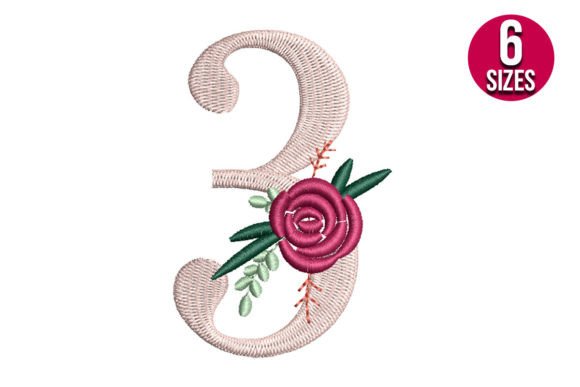
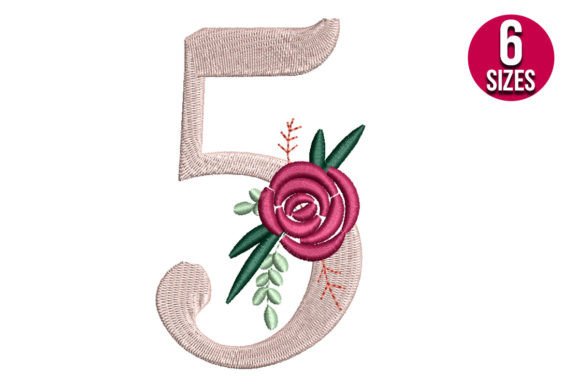
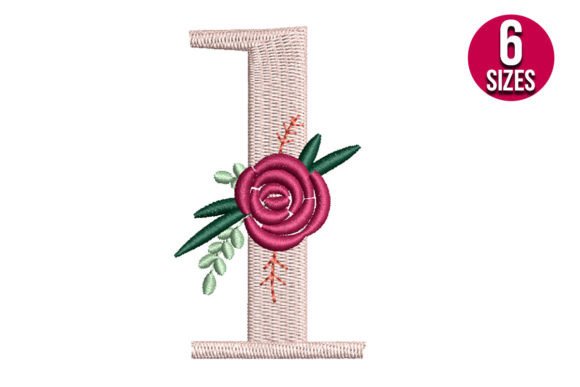
When I unzip a new machine embroidery design file, I want that immediate spark—the one that tells me this will stop a customer mid-stride at a busy craft fair product table. Floral Number 1 delivers that spark within seconds. The “one” is not just a digit; it reads as a delicate bouquet wrapped into a single, confident shape. It lands somewhere between modern whimsy and soft botanical elegance. It is cute enough for a child’s birthday onesie, yet refined enough for a linen tea towel destined for a grandmother’s kitchen. That range is rare, and for a seller juggling multiple handmade product lines, it solves a lot of inventory guessing.
The floral arrangement inside the number feels airy, not stuffed. Petals and tiny leaves are scattered with enough openness to let the background fabric breathe. That matters because dense stitch areas can feel bulletproof on a tote bag—and not in a good way. From a designer’s eye, the balance here leans decorative without tipping into fragile. I can already picture it in a hoop on my studio wall as a printable mockup, and I know it will photograph beautifully for Etsy seller listings because the shapes hold their own even in a thumbnail.
Where Floral Number 1 Actually Belongs in Your Booth
Placing the right design on the right product is the quiet profit lever most handmade sellers overlook. With Floral Number 1, the product family tree almost writes itself.
The Tote Bag Sweet Spot
This design shines as a large focal piece on a canvas tote bag design. Centered on a natural cotton tote, the floral 1 becomes an instant birthday gift statement. Customers pick up totes, feel the embroidery texture, and immediately assign emotional value—especially when they realize they can customize the number with a name or date later. The design’s flow works with the vertical plane of a tote, pulling the eye upward and making the bag feel intentional, not just stamped.
Tea Towels That Sell in Pairs
For tea towel embroidery, this design is a quiet powerhouse. A single “1” on a crisp flour sack towel whispers “first birthday,” “first home,” “first grandchild.” I would pair it with a simple striped trim and sell it stacked with a coordinating neutral towel. The floral detail turns a $3 towel blank into a $22 handmade product without arguing about price. One caution: avoid textured towels with heavy slubs. The tiny leaves and petal gaps need a flat weave to stay crisp. Test on a smooth cotton-linen blend first.
Apron Embroidery That Commands Attention
On an apron embroidery bib, Floral Number 1 becomes an heirloom detail. I see it working best on a half-apron in chambray or washed denim. Off-center placement near the hip pocket gives a boutique vibe that resists the “homemade” label. The one thing I’d stress: use a sharp needle and a quality cutaway stabilizer. The bib area of an apron gets pulled and washed relentlessly. A dense floral stitch without proper backing can pucker within three wash cycles. Test, wash, dry, repeat. If it passes that, you’ve got a premium commercial embroidery product.
Patches, Pouches, and Tiny Treasures
An embroidered patch version of Floral Number 1 on a felt backing would be a low-risk, high-margin add-on. Patches are instant impulse buys at craft fairs, especially when displayed in a basket with the phrase “birthday patch bar.” The floral motif makes it unisex enough for kids and adults. For fabric pouches, stitch it small on the corner of a zippered pouch. A floral 1 on a linen pouch holding a candle or piece of jewelry upgrades the entire gift’s perceived value. You stop being the seller with pouches and become the seller with coordinated gift sets.
On caps, be selective. The design’s delicate petal gaps may close up on deeply curved surfaces or textured fabric texture like washed twill. If you must go on a hat, shrink it down and place it on the side panel, not the front. Test on a scrap first; the small lettering and floral details can become a blurry mess if you force the hoop size too small.
Practical Production Notes: From Hoop to Packaged Product
Before I cut a single piece of fabric for a craft fair batch, I run a mental checklist. Here’s how Floral Number 1 holds up under real stitching scrutiny.
Stitch Density and Small Details
The design appears to prioritize visual rhythm over sheer stitch count, which I appreciate. Overly dense areas turn a soft floral into a stiff plate, and that’s death on a lightweight tee or onesie. However, any design with small petals and thin curved stems will have some stitch density hotspots. Pay attention to the transition where the floral elements meet the backbone of the number. If that area feels raised or overly tight on your test sewout, add a layer of water-soluble topper to smooth it out. This is especially true on dark fabric—tiny details vanish quickly.
Thread Colors and Contrast Drama
Your thread colors choice is where this design gains personality. Stitch it tone-on-tone in dusty rose on blush linen, and you have a soft, premium minimal look that Etsy shoppers adore. Go bold with coral petals and sage leaves on natural cotton, and it feels fresh, garden-party ready. I strongly recommend creating three distinct colorway samples for your booth. Customers rarely buy what they can’t visualize, and a trio of contrasting Floral Number 1 samples—say, on a tote, a tea towel, and a small patch—dramatically shortens the “how do I use this?” conversation.
Stabilizer and Hoop Size Wisdom
I cannot overstate the importance of stabilizer choice. For woven fabrics like linen, medium-weight cutaway is your friend. For knits or onesies, a no-show mesh stabilizer plus a temporary spray adhesive keeps the design from tunneling. The hoop size required will vary depending on the exact embroidery file dimensions, so check the provided chart before assuming it fits your smallest hoop. This design might not be index-sized; if you plan to offer it as a tiny pocket accent, confirm the file formats include a condensed version or test scaling carefully. The description mentions multiple embroidery file formats, but always verify the stitch quality after resizing.
Photographing Floral Number 1 for Online Listings
As an Etsy seller, I know the listing image makes or breaks a small shop product. Floral Number 1 photographs like a dream because the negative space around the petals creates a clear silhouette. On a flat lay, it pops. On a styled model wearing a tote, it reads instantly. For digital sellers offering this as a digital embroidery file, a printable mockup showing the design on a suggested blank product can increase conversion because it sells the final vision, not just a file. Just ensure your mockup reflects real stitch texture—buyers need to trust the digital preview.
Customer Attention and Booth Psychology
Craft fair shoppers scan with their eyes first and their hands second. A table filled with floral designs can become a blur of petals. The genius of Floral Number 1 is that the number creates an anchor. People recognize “1” from a distance, and the floral detail rewards the close-up inspection. This design triggers the “personal connection” reflex. Someone walks by and thinks, “My niece turns one next month.” That moment—the eyes widening, the hand reaching for the product—is the moment a sale begins. Use that. Place the design prominently at eye level on a neutral background. Let it breathe.
Repeatability and Batch Production Reality
If you’re stitching 20 totes the night before a market, you need a design that behaves. Floral Number 1 appears to have a logical stitch path. Designs that jump between far-apart elements without trimming cause thread nests and time waste. From what I see in the elegant flow of the petals, the digitizing likely follows a smooth order. You’ll still need to check. Stitch one sample, cut it, and inspect the back. Does it have excessive trims? Does the machine pause awkwardly? These small details affect your production speed and your sanity at 1 a.m. before a show.
Brand Consistency and Handmade Quality
For creative entrepreneurs building a brand, this design supports a cohesive “Celebrate with Bloom” aesthetic. It pairs easily with other floral numbers, monograms, or botanical wreaths. That brand consistency across an apron embroidery, a tea towel embroidery, and a market bag builds trust. Customers begin to recognize your style. The perceived handmade quality goes up because the design’s artistic detail doesn’t feel mass-produced. It feels like something from a boutique, even when you’ve stitched ten in a row.
Careful-Use Notes to Avoid Booth Disasters
- Dense stitch areas: Watch the center intersections where multiple floral elements converge. Test with a topper if puckering appears.
- Tiny details and small sizes: Do not reduce this design below a 2-inch height for detail clarity. Small petals can disappear into thick fabric or loose weaves.
- Thick fabric and textured towels: The design’s open airiness benefits from a smooth substrate. Terri cloth or waffle weave may swallow the petal gaps.
- Curved cap surfaces: Stick to flat or slightly domed placements. A curved cap crown can warp the number, making the “1” look bent.
- Dark fabric: Increase contrast or use a slightly thicker thread to prevent the floral elements from shrinking visually.
- Small lettering: There are no words, but any small accompanying text would demand extreme caution regarding legibility.
Final Designer Verdict Before the Market
After assessing everything from stitch density to fabric texture, I would confidently give Floral Number 1 a prime spot in my craft fair lineup. It is the kind of machine embroidery design that elevates a handmade product from “nice try” to “take my money.” For birthday-focused items within Birthdays gifting, it fills a gap beautifully—a number that feels like a gift itself. It performs on a tote bag design, feels exquisite on an apron embroidery, and creates quick emotional pull as an embroidered patch. For Etsy seller shops and small shop product owners, the multiple embroidery file formats promise flexibility, though I still urge you to confirm exact hoop dimensions and commercial embroidery licensing terms.
Create at least one finished physical product mockup before printing your booth signage. Check thread contrast on your chosen blanks. And most importantly—let this floral number do the talking. Stitch it with care, display it proudly, and watch the one-year-old birthday shoppers flock to your table. That is the power of a design that truly understands the craft fair product game.