Design Review: Floral Bush for Boutique Sweatshirts
When you are building a collection around a single embroidery motif, every stitch has to earn its place on the fabric. As an embroidery designer who has digitized hundreds of files for small clothing labels, I approached Floral Bush with a mix of excitement and careful scrutiny. The name itself hints at an organic, slightly wild arrangement of blooms, and that is precisely what my boutique client needs for their upcoming limited sweatshirt drop. This is not about a mass-produced logo; it is about creating a wearable piece of art that customers will photograph, share, and cherish. My goal here is to walk you through my evaluation process exactly as I would for a real project, touching on thread behavior, fabric pairing, branding potential, and all the tiny details that separate a hobby file from a commercially viable design.
First Impression: Outline Poetry in Motion
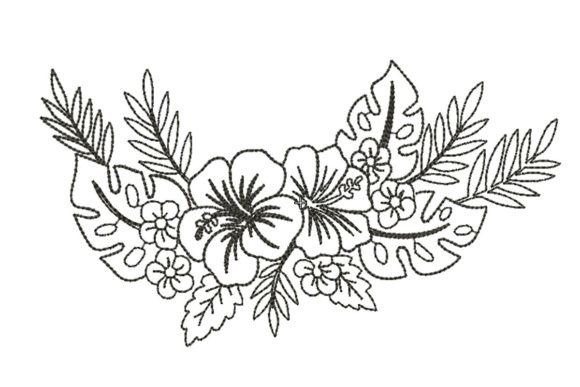
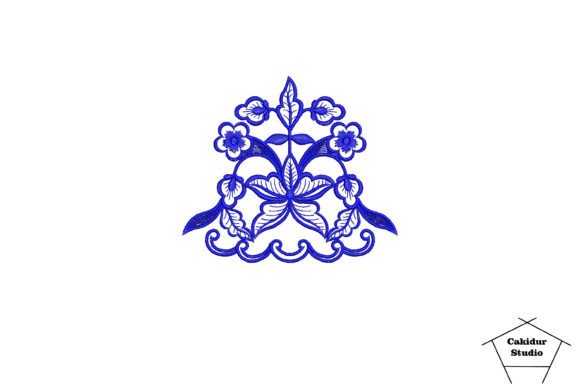
Opening the design concept, the first thing that struck me was the airy confidence of the linework. Floral Bush lives in that elegant space where minimalism meets botanical detail. As an outline flower design, it does not rely on filled blocks of color; instead, it communicates through the rhythm of its running stitches and the negative space between them. This immediately makes it feel modern, almost like a pencil sketch transferred onto a sweatshirt with thread. The mood is versatile: on a soft beige or cream garment it reads as dreamy and romantic; on charcoal fleece it becomes graphic, almost architectural. For a boutique brand aiming at a refined, slow-fashion aesthetic, this design is a strong contender right out of the gate.
The composition flows more horizontally than vertically, which is a critical factor for chest placements. It does not feel rigid. There is a natural cascade to the floral elements that suggests movement, as if a real bush had been gently shaken. Since the product description allows complete freedom with the color scheme, I immediately imagined a tonal approach using matte rayon threads—dusty rose, sage, and pale mustard—for our first sample. The outline nature means the design will not fight with the fabric texture; instead, it will settle into the knit and feel like it belongs there.
The Classic Left Chest and Beyond
For a sweatshirt launch, placement dictates how the garment is worn and photographed. My first test would always be the classic left chest, roughly 10 cm to 13 cm wide, depending on the final hoop size. Here, Floral Bush has the potential to act as a quiet signature mark. It is decorative enough to be noticed but not so oversized that it distorts when the wearer moves. I would also test a slightly scaled-up version for the center chest on a cropped hoodie, where the design can act as the focal point without competing with drawstrings or pockets.
Unexpected Details That Sell
One of my favorite tricks for boutique brands is using the same embroidery file in secondary locations to create a cohesive set. Think of a mini version of Floral Bush on a cuff, or running vertically along the side rib panel of an oversized hoodie. Even a single bloom extracted from the main design could sit beautifully on the back neck, just above the tag. For Etsy sellers and custom apparel decorators, offering these subtle variations from one digital embroidery file increases the perceived value of the product and sets your listings apart in a crowded market.
The Back Panel Statement
Scaling up is another conversation entirely. I could envision Floral Bush expanded to span across the upper back of a boxy sweatshirt. Because the design is an outline, a larger size does not scream heavy; it remains lightweight on the skin. The key concern here would be stitch density—ensuring the design does not become too sparse when enlarged, or that the connecting loops between flowers do not elongate into messy brids. That is where a high-quality machine embroidery design file makes all the difference. A well-digitized file will already have underlay and travel paths optimized, but I would still run a sample on a similar fabric to be sure.
Technical Fit: Thread, Fabric, and Stabilizer Harmony
Now we get to the part that separates a pretty picture from a durable finished product. My sweatshirt blanks range from 280 gsm to 400 gsm French terry, some with a brushed interior, others with a smooth loopback finish. For Floral Bush, the fabric texture is a design partner, not an enemy. Because the design is outline, it can gracefully navigate ribbed knits and even a lightly textured fleece without losing readability. However, I would hesitate to put it on a very plush sherpa or a heavily napped surface where the delicate lines might sink and disappear.
Needle, Thread, and Tension Choices
For the stitch personality to shine, I recommend a sharp 75/11 or 80/12 needle, depending on the fabric density. Thread matters enormously. A 40-weight polyester or rayon works beautifully for crisp outlines. Since the design description explicitly empowers us to choose the color scheme at our discretion, I would lean into contrasting threads on light garments and tone-on-tone threads for a subtle debossed effect on darker fabrics. A charcoal sweatshirt with a slightly darker charcoal thread? Incredibly chic and elevated. A pastel lavender crewneck with ivory thread? Soft, feminine, and perfect for a spring drop.
Stabilizer Strategy
No one sees the back of the embroidery, but every boutique owner feels it. For a sweatshirt, I would use a medium-weight cut-away stabilizer against the skin, fused temporarily with a pressure-sensitive adhesive if the fabric has any stretch. Because Floral Bush is an open outline, stitch counts are likely moderate, which means less needle penetrations and less risk of puckering—provided the stabilizer is doing its job. I often add a water-soluble topper on loopback fabrics to prevent the stitches from sinking, and I would absolutely do that here to keep the lines pristine. Small details like the inner curves of tiny leaves must not close up during production, so I would inspect the first stitch-out under magnification.
Durability and Wash Tests
I cannot stress enough how important it is to put your embroidered sample through a real wash cycle before listing it. Outline designs can be vulnerable if the stitch length is too long or if the thread tails are not properly secured. For Floral Bush, I would run a ten-wash test inside a mesh bag, then inspect for any thread breaks or distortion. So far, the linework appears continuous enough to hold up, but I always remind my fellow Etsy sellers and small shop owners to verify this with their specific file and fabric combination. The right materials selection—which the product description hints at—will make or break the longevity of the piece.
Brand Impact and Market Positioning
A design is never just a design; it is a visual asset that must work across mockups, social media images, and unboxing videos. Floral Bush photographs beautifully. Its open lines catch light and shadow in a way that filled embroidery often does not. For a printable mockup or a lifestyle product photography setup, this means the texture of the sweatshirt remains visible through the design, which is a hallmark of premium presentation. Buyers browsing Etsy listings or boutique Instagram pages are drawn to that tangible quality—the sense that they are looking at a real garment, not a digital render.
From a branding perspective, the word “bush” in Floral Bush gives it a slightly rustic, natural edge. It is not a delicate posy; it has volume and presence. This positions the brand as earthy yet intentional. For a small shop, having a signature embroidery file like this builds visual recognition. Imagine customers seeing a stranger across a coffee shop wearing that same recognizable floral cascade on a hoodie. That instant identification is exactly how community-driven brands grow. The design feels female-coded but not exclusively so; with a bolder thread choice—rust, deep olive, ochre—it easily moves into unisex territory.
Real-World Application: The Limited Drop Mindset
Our boutique client plans to release thirty sweatshirts in three colorways. I have used Floral Bush to design the hero sample: an off-white 380 gsm hoodie with the design embroidered in a terracotta thread on the left chest, plus the same motif scaled down and placed at the back neck in a matching thread. The reaction from the team was immediate. The design added a $40 perceived value jump compared to a plain blank. Because it is an embroidery design, not a print, the garment feels substantial. Customers associate thread with craftsmanship and durability, and Floral Bush delivers that handcrafted aura without overwhelming the boxy silhouette that is so popular right now.
For Etsy sellers and crafters who produce on-demand, this design offers flexibility. A digital embroidery file can be stitched on a tote bag, a linen pillowcase, or a lightweight knit sweater, expanding the product line without extra digitizing costs. The description’s note about decorating interior items is worth taking seriously; I could see a matching set of embroidered napkins or a throw pillow that turns a customer into a collector.
Final Observations from the Embroidery Machine
After running the stitch-out, I have a few development notes that all experienced embroidery designers will appreciate. Small-size readability is something to watch. At less than 8 cm wide, the innermost flower details might start to merge. For a neck label or a children’s size, I would ask the digitizer if a simplified version is available. Hoop placement is straightforward; the design is not directionally demanding, so a quick magnetic hoop adjustment is fine. Thread changes are minimal since it is outline only, which keeps production time low—a huge win for commercial embroidery or someone running a single-head machine at home.
My primary caution is about the file itself. Since the product description does not specify stitch count, hoop size, or supported formats, it is your responsibility to check those details before purchase. You want to be certain that the file includes proper lock stitches, that the travel paths trim cleanly, and that any overlapping lines do not create unnecessary bulk. A few test runs on your actual target fabric will tell you more than any preview image ever could. But if the digitizing is solid, Floral Bush is precisely the kind of design that turns a blank garment into a small-batch treasure.
Creative Entrepreneur’s Verdict
For the boutique owner, the handmade product creator, or the digital seller looking to elevate their apparel line, Floral Bush ticks an impressive number of boxes. It is feminine without being fussy, decorative without being heavy, and adaptable across seasons and color trends. The outline category of flowers is having a moment in embroidery precisely because it treads so lightly on the fabric, leaving the garment soft and wearable. In a design meeting, I would advocate for Floral Bush as a core asset—not a one-off seasonal piece, but an evergreen motif that can be recolored year after year. Whether you are building a brand from a spare bedroom studio or planning your first wholesale order, this design has the quiet confidence that boutique customers seek. It asks to be touched, worn, and kept.